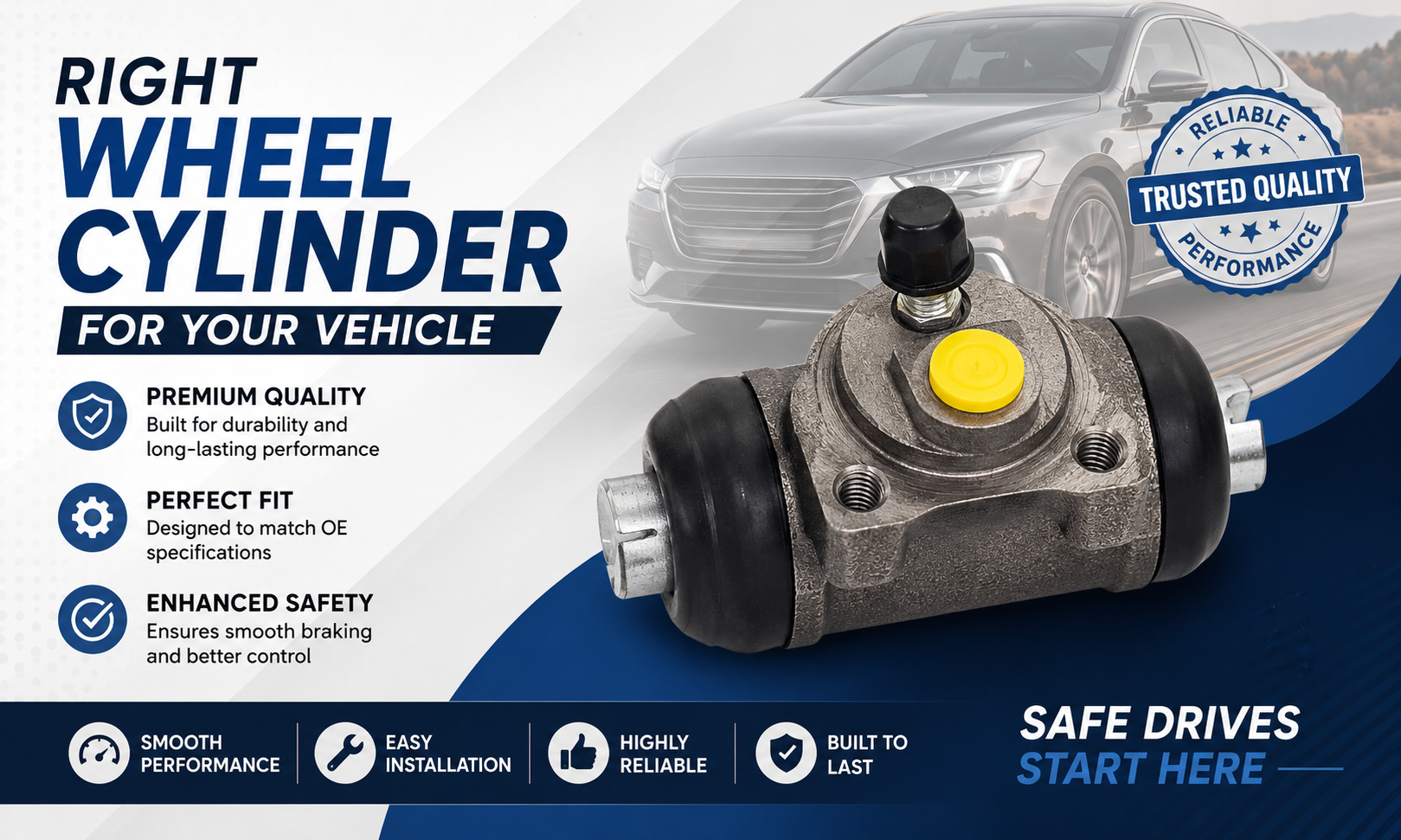
Your vehicle's braking system is one of its most important safety features, and every component plays a critical role in ensuring reliable stopping performance. While many drivers pay attention to brake pads and discs, the wheel cylinder is often overlooked until a problem appears. A worn or damaged wheel cylinder can reduce braking efficiency, cause brake fluid leaks, and increase the risk of brake failure.
If your vehicle uses a drum brake system, selecting the right wheel cylinder is essential for maintaining safe and smooth braking performance. However, with so many options available, choosing the correct component can be confusing, especially if you are replacing it for the first time.
This Wheel Cylinder Buying Guide explains everything you need to know before making a purchase. From understanding how a Drum Brake Wheel Cylinder works to identifying the right specifications and avoiding common buying mistakes, this guide will help you make an informed decision and keep your vehicle's braking system performing at its best.
What Is a Wheel Cylinder?
A wheel cylinder is an important hydraulic component found inside a drum brake system. Its primary function is to convert hydraulic pressure from the brake master cylinder into mechanical force that pushes the brake shoes outward against the brake drum. This friction slows down and eventually stops the vehicle.
Whenever you press the brake pedal, brake fluid travels through the brake lines into the wheel cylinder. The pistons inside the cylinder move outward, forcing the brake shoes to make contact with the drum. Once the brake pedal is released, the return springs pull the brake shoes back into their original position.
Although it is a relatively small component, the wheel cylinder has a direct impact on braking efficiency, vehicle safety, and overall driving confidence.
Why Choosing the Right Wheel Cylinder for Your Vehicle Matters
Choosing the correct Wheel Cylinder for Your Vehicle is not simply about replacing an old part. The right component ensures proper hydraulic pressure, smooth brake operation, and long-term reliability.
An incorrect wheel cylinder may cause:
-
Uneven braking performance
-
Brake fluid leakage
-
Reduced stopping power
-
Premature brake shoe wear
-
Increased maintenance costs
-
Poor vehicle handling during braking
Investing in a high-quality replacement helps maintain braking performance while reducing the chances of unexpected repairs in the future.
How a Drum Brake Wheel Cylinder Works
Understanding how a Drum Brake Wheel Cylinder operates makes it easier to appreciate its importance.
The braking process follows these simple steps:
-
The driver presses the brake pedal.
-
Hydraulic pressure builds inside the brake system.
-
Brake fluid enters the wheel cylinder.
-
The pistons move outward.
-
Brake shoes press against the drum.
-
Friction slows the wheel.
-
Releasing the brake pedal allows the springs to return the shoes to their original position.
Since this process happens every time you brake, the wheel cylinder experiences continuous pressure and movement. Over time, seals may wear out, leading to leaks or reduced braking performance.
Signs Your Wheel Cylinder Needs Replacement
Many vehicle owners do not notice wheel cylinder problems until braking performance starts to decline. Recognizing the warning signs early can help prevent expensive repairs and improve road safety.
Watch for these common symptoms:
Brake Fluid Leakage
One of the earliest signs of failure is brake fluid leaking around the wheel assembly. Any visible fluid near the drum brake should be inspected immediately.
Soft or Spongy Brake Pedal
A damaged wheel cylinder may lose hydraulic pressure, causing the brake pedal to feel softer than normal.
Reduced Braking Performance
If your vehicle takes longer to stop than usual, the wheel cylinder may no longer be functioning efficiently.
Uneven Braking
A faulty cylinder on one side can cause the vehicle to pull left or right while braking.
Contaminated Brake Shoes
Brake fluid leaking onto the brake shoes reduces friction and affects stopping performance.
Ignoring these warning signs can increase repair costs and compromise vehicle safety.
Factors to Consider Before Buying a Wheel Cylinder
Buying the right Automotive Wheel Cylinder Parts requires more than simply matching the vehicle model. Several important factors should be considered before making your purchase.
Vehicle Compatibility
Always verify the vehicle's make, model, year, and brake system specifications. Even similar models may use different wheel cylinders.
Checking the OEM part number or consulting your vehicle manual can help ensure compatibility.
Material Quality
High-quality wheel cylinders are manufactured using durable materials such as cast iron or aluminum with corrosion-resistant finishes.
Premium materials provide:
-
Longer service life
-
Better resistance to rust
-
Improved hydraulic performance
-
Enhanced durability
Seal Quality
The internal rubber seals prevent brake fluid leakage.
Choose products that use high-quality seals capable of withstanding high temperatures and continuous hydraulic pressure.
Poor-quality seals often become the primary reason for early failure.
Manufacturing Standards
Reliable manufacturers follow strict quality control procedures to ensure dimensional accuracy, pressure resistance, and long-term durability.
Precision engineering helps ensure proper fitment and consistent braking performance.
OEM vs Aftermarket Components
Both OEM and quality aftermarket components can perform well when manufactured to the correct standards.
OEM components provide factory specifications, while trusted aftermarket manufacturers often offer cost-effective alternatives without compromising performance.
The key is choosing products from reputable manufacturers known for consistent quality.
Common Mistakes to Avoid
Buying a wheel cylinder may seem straightforward, but several common mistakes can lead to unnecessary expenses.
Buying Only Based on Price
Choosing the cheapest option may save money initially, but inferior components often wear out faster and increase maintenance costs.
Ignoring Compatibility
Never assume all wheel cylinders are identical.
Always verify compatibility before ordering.
Replacing Only One Side
Many automotive professionals recommend replacing wheel cylinders in pairs whenever possible.
This helps maintain balanced braking performance across both wheels.
Overlooking Quality Certifications
Products manufactured under strict quality standards generally deliver better reliability and service life.
Maintenance Tips for Longer Wheel Cylinder Life
Proper maintenance helps extend the life of your braking system.
Here are a few simple practices:
-
Inspect the brake system during routine servicing.
-
Replace contaminated brake fluid according to the manufacturer's recommendations.
-
Check for fluid leaks regularly.
-
Replace worn brake shoes before they damage other components.
-
Keep the drum brake assembly clean during maintenance.
-
Use recommended brake fluid only.
Preventive maintenance is usually more affordable than major brake repairs.
Final Buying Checklist
Before purchasing a Wheel Cylinder for Your Vehicle, ask yourself the following questions:
-
Is it compatible with my vehicle?
-
Does it match the OEM specifications?
-
Is it manufactured using durable materials?
-
Are the seals made for long-term reliability?
-
Does it come from a trusted manufacturer?
-
Has it been quality tested?
If the answer is yes to all of these, you are making a smarter investment in your vehicle's safety.
Conclusion
Selecting the right wheel cylinder is an important step in maintaining a safe and reliable braking system. A properly manufactured component improves braking efficiency, reduces maintenance costs, and helps ensure consistent performance in everyday driving.
Instead of focusing only on price, consider compatibility, build quality, material strength, manufacturing standards, and overall reliability. A well-informed purchase not only protects your vehicle but also enhances road safety for you and everyone around you.
When sourcing precision-engineered Automotive Wheel Cylinder Parts, choose manufacturers that prioritize quality, durability, and consistent engineering standards to ensure dependable performance for both OEM and replacement applications.